Keep up to date with market trends and the latest finance news.
Our trusted partner Bionic, has experts who handle the comparison for you and guide you through your quotes.
Compare Business EnergyIn a constantly changing market, locking in a Business Energy deal could be beneficial.
Our trusted partner, Bionic, has experts who will handle the quote for you and take you through your options.
Compare Business InsuranceSecure your business with the right insurance. From contents to cyber, we've got you covered.
We compare our best Business Broadband deals to find the ideal solution for your business.
Get ConnectedFind everything you need to decide which Business Broadband plan is right for you.
Set yourself up to take (and make) payments easily.
Find our most popular recent guides here.
This article will give you all the guidance needed to help you make an informed decision and switch business broadband providers smoothly and quickly.
Read all guides and advice >Keep up to date with market trends and the latest finance news.
Our trusted partner Bionic, has experts who handle the comparison for you and guide you through your quotes.
Compare Business EnergyIn a constantly changing market, locking in a Business Energy deal could be beneficial.
Our trusted partner, Bionic, has experts who will handle the quote for you and take you through your options.
Compare Business InsuranceSecure your business with the right insurance. From contents to cyber, we've got you covered.

We compare our best Business Broadband deals to find the ideal solution for your business.
Get ConnectedFind everything you need to decide which Business Broadband plan is right for you.
Set yourself up to take (and make) payments easily.
Find our most popular recent guides here.
This article will give you all the guidance needed to help you make an informed decision and switch business broadband providers smoothly and quickly.
Read all guides and advice >Compare Renewable Energy Tariffs for Businesses

We compare over 150 business energy tariffs
In recent years the energy industry has moved towards reducing its carbon footprint. Although traditional energy sources are still relied upon, an increasing number of suppliers are offering renewable energy for business.
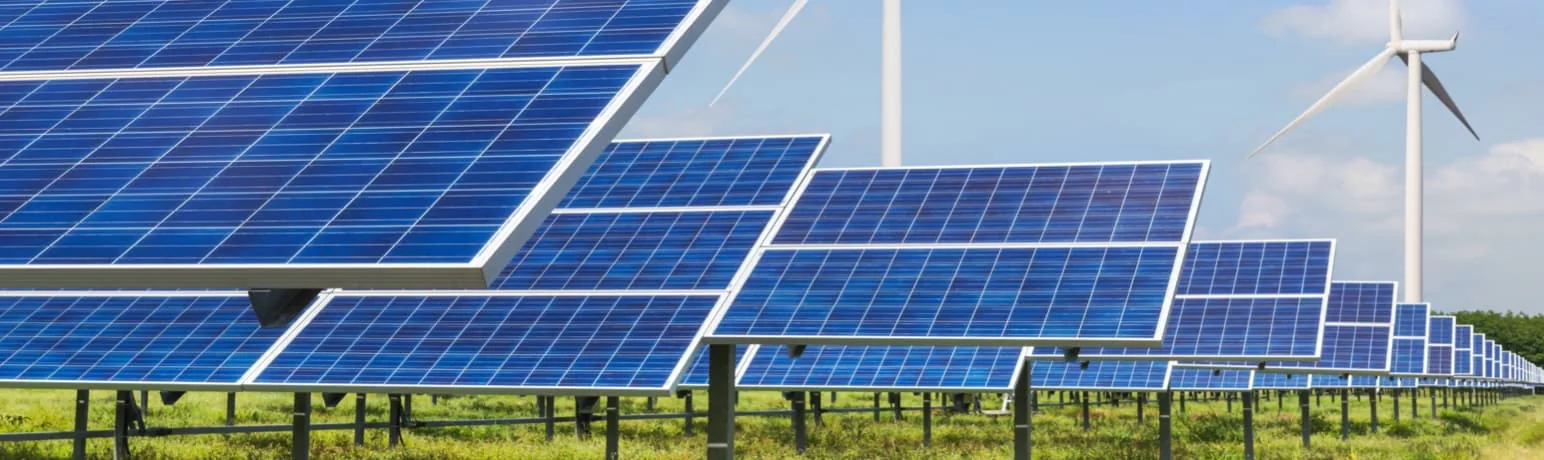
For example, solar business energy, wind business energy, water business energy and biomass business energy are contributing to our supply. You may already be using green business energy biofuel, so now is the time to compare renewable energy sources.
The more you understand about alternative energy for business use, the better equipped you will be to find a supply. Although they sound quite similar, there are some differences between renewable and green energy.
Renewable energy is sourced from renewable natural resources. Renewable business energy examples include wind, sun, rain, tidal and geothermal heat. The most common form of renewable energy is wind power, although continued investment is being made into all forms.
The green business energy meaning is quite similar, as most renewable forms of energy are green. However, green energy is a term used to describe energy produced in a clean, harmless way. For example, geothermal energy is renewable, but some of the processes have a negative environmental impact.
There are a variety of renewable business energy benefits, although the main advantage is improvements to Corporate Social Responsibility (CSR). As we become increasingly aware of the effects of climate change, more businesses are considering green business energy benefits. By making use of secure resources, it is possible to reduce dependence on non-renewable energy.
There are also financial benefits through improved energy efficiency, resulting in reduced renewable and green business energy bills. For example, many of the renewable business energy companies UK wide will provide free smart meters. These will allow users to monitor their green business energy electric and gas usage levels. This information can be used to adjust energy usage and lower future bills.
In some situations, it may even be possible to sell surplus energy back to a renewable business energy company. There are also a range of renewable business energy grants UK wide and green business energy grants UK wide. Your local council will be able to advise you if there are any available in your area.
If you are searching for a renewable energy company UK wide, it is easier than you think. Today, the majority of suppliers offer green and renewable energy 4 business. When you arrange a renewable tariff, the supplier will purchase the green energy for business use on your behalf.
The energy could come from a variety of renewable and green business energy solutions. Your supplier will be able to let you know which green business energy products are included in your supply.
You will be able to purchase renewable energy in exactly the same way as you would purchase a non-renewable supply.
The suppliers simply sell you energy with has been purchased from renewable energy sources.
Some suppliers will offer 100% renewable energy however, some will provide a mixture of non-renewable and renewable energy.
It is usually possible to check how much renewable energy your supplier provides, by checking their fuel mix. The information should be available on the individual supplier websites and will include what fuels are purchased. However, technically Ofgem only requires electricity figures to be published.
There are plenty of suppliers which offer 100% renewable electricity, but renewable gas is more difficult to supply. This is because it is not widely available, but many suppliers are committed to providing you with the greenest energy.
As one of the leading renewable business energy comparison websites, we can source green and renewable business energy quotes. We have developed a quick and easy tool which will help you compare renewable business energy suppliers. Instead of comparing green business energy prices from individual suppliers, we will negotiate prices from our whole panel.
All we require are a few key details, which you will be able to find on your most recent energy bills. Simply enter the name of your tariff, the rate you pay and how much you spend into our convenient tool. Once we understand your energy consumption habits, we will be able to negotiate a competitive green business energy deals.
Our team of energy experts will remove the hassle from the comparison process by approaching our panel on your behalf. To ensure the quotes we receive are accurate, we will require you to provide a few key details. The majority of these can be found on your most recent bill or contract. Including; the name of your supplier, the date your contract ends, the amount you use, the price you pay and your MPAN number.
This information will be used by the array of potential suppliers to calculate an accurate quote. This means the quotes you receive will be based on the exact requirements of your business. We will present you with the available tariffs, so that you can pick the ideal supplier for your business. We know that when you switch business electricity supplier it isn’t always just about the price. Our excellent knowledge of the commercial electricity market means we can offer advice about the various energy options for your business.
If you are looking to move to a sustainable business energy tariff, the first step is to compare supplier deals. Once you enter your details, we will negotiate deals with our renewable and green business energy providers UK wide. You will then be able to compare green business energy quotes.
It is important to consider every factor within the green business energy quote online. For example:
1) Do they offer competitive renewable and green business energy rates?
2) What are the suppliers renewable and green business energy reviews?
3) Are the tariffs available designed to supply green energy for small businesses or large organisations?
4) What are their renewable and green business energy environment policies?
If the prices we negotiate will provide you with the tariff you are looking for, we can help you switch. We will pass your details across to your new supplier, who will complete the changeover for you. There is no disruption and all you need to do is take a green business energy meter reading. On the day your supply charges you will need to take a final meter reading. This will be used to calculate your final bill from your old supplier
We have partnered with a wide variety of renewable and green energy companies. These include the ‘Big Six’ suppliers, which provide roughly 80% of the energy consumed in the UK. For example, you will have access to everything from British Gas business renewable energy prices to nPower green tariffs. The majority of suppliers will have many tariffs, such as the nPower Go Green tariff and Ovo Green Energy add-on.
The suppliers we partner with aim to provide competitive prices and green business energy ideas, to help you reduce consumption.
Arranging a renewable energy tariff is no substitute for improving your energy efficiency. If you want to reduce your businesses carbon footprint, you should also investigate ways to lower your energy use.
If you are interested in using renewable energy to power your business, there are many suppliers to choose from. The energy industry is making great moves towards increasing the use of renewable energy, with many suppliers beginning to offer competitive green business tariffs. The following are some of the top renewable business energy suppliers in the UK, including some of the ‘Big Six’ and a selection of independent suppliers.
Bulb is a relatively new energy supplier, although since 2015 their simple tariffs and commitment to supplying renewable energy has made them a popular choice for many businesses. Their entire electricity supply is sourced from 100% renewable sources, with a single tariff and very competitive prices. If you do decide to move to another supplier there is no minimum contract length and they do not charge exit fees.
OVO Energy are another supplier offering 100% green electricity, although they also offer 15% green gas. They use a variety of renewable sources, including anaerobic digestion, solar power, wind power and hydro power. They have won awards for their customer service, although there is an exit fee to pay if you switch to another supplier.
As one of the ‘Big Six’ energy suppliers, NPower is a popular option for many businesses. They currently offer 100% green electricity, although renewable gas supplies are not yet available. If you decide at a later date to switch to another supplier, your business will be charged an exit fee. However, there are no auto-rollovers on their energy contracts, which makes switching to the best tariff quick and easy.
E.ON provides 100% green electricity through a competitive tariff, while also investing continually in renewable energy supplies. As another of the Big Six suppliers, many businesses use the energy services of E.ON.
If you are worried about finding the best renewable energy supplier at the best possible prices, it is actually much easier than you might think. Renewable energy isn’t always more expensive, especially when we can help you compare prices. You will be able to purchase your renewable energy in exactly the same way as your current supply, the suppliers simply sell you energy which they have brought from renewable sources.
We can help you compare quotes for your renewable business energy from our panel of suppliers, saving you time and money. All we require are a few key details about your consumption habits and we will then be able to find the best tariff for your individual business. If you would like to find out more about switching to a renewable energy supplier, please contact our team today.
Green Energy UK are currently the only supplier to offer 100% green gas and 100% green electricity, making them one of the greenest energy suppliers available. They use hydro, wind and solar renewable energy sources and the contracts are offered with no exit fees. For business users it is possible to choose between renewable electricity tariffs and dual fuel plans.
Ecotricity is the only energy supplier to be approved by the Vegan Society and they also campaign against fracking. They offer 100% green electricity, although their gas supply is not yet 100% green. If you are looking for a renewable and ethical energy supplier, Ecotricity could be a great option.
Octopus Energy provide 100% green electricity by matching your usage levels to the amount of renewable energy generated. The supplier has a great reputation for competitive prices and transparency about its renewable energy sources. They provide both electricity and gas tariffs, although opting for their green tariff will provide you with a 100% renewable electricity supply.
Renewable business energy refers to electricity or heat generated from sustainable sources, such as:
Solar power
Wind energy
Hydropower
Biomass or geothermal systems
Businesses can either:
Switch to a supplier offering renewable tariffs
Generate their own energy on-site (e.g. solar panels)
This helps reduce carbon emissions and, in many cases, energy costs.
It depends on your setup and usage.
Renewable energy can reduce costs if:
You install solar panels and generate your own electricity
You use energy during peak generation times (e.g. daytime for solar)
Electricity prices remain high
However:
Upfront installation costs can be significant
Savings depend on local energy prices and incentives
Not all businesses see immediate ROI
A site-specific cost analysis is essential before investing.
Businesses can switch in two main ways:
Renewable energy tariffs
Switch to a supplier that provides 100% renewable electricity
On-site generation
Install systems such as solar panels or battery storage
Many businesses choose a combination of both.
Solar can be highly cost-effective, but only under the right conditions.
It works best if:
Your business uses most energy during the day
You have suitable roof space or land
Electricity prices are high
Profitability depends on:
Installation costs
Energy usage patterns
Local tariffs and export rates
For some businesses, solar delivers strong long-term savings. For others, payback can take longer.
Yes, through export schemes.
Businesses can:
Sell unused electricity back to the grid
Offset costs by exporting surplus energy
However:
Export rates vary
They are often lower than the cost of buying electricity
Payments depend on your energy supplier and setup
Not always.
Batteries:
Store excess energy for later use
Help reduce reliance on the grid
Improve resilience during outages
However:
They add a high upfront cost
In some cases, it’s cheaper to export electricity and buy it back later
The right choice depends on your usage pattern and pricing structure.
Batteries can be valuable, but they are not always necessary.
They are most useful if:
You operate outside solar generation hours
You are on time-of-use tariffs
You want backup power
However, poor sizing or incorrect setup can reduce ROI. The key is to match battery capacity to your actual energy usage.
Time-of-use tariffs charge different rates depending on when electricity is used.
For example:
Cheaper rates at night
Higher rates during peak hours
Batteries and solar systems can help businesses:
Store cheap energy
Use it during expensive periods
It depends on pricing.
In some cases:
Selling excess energy and buying later is cheaper
In others:
Storing and using your own energy reduces costs
This decision should be based on:
Export rates
Electricity prices
Usage timing
These options can work, but are less common:
Wind energy:
Requires a suitable location and can be costly to install and maintain
Geothermal:
Suitable for heating/cooling in specific building types
Most businesses choose solar first due to simplicity and lower cost.
A hybrid system combines multiple technologies, such as:
Solar panels & battery storage
Renewable energy & grid supply
These setups can:
Improve reliability
Reduce costs over time
Provide flexibility
ROI depends on several variables:
Installation costs
Energy usage
Electricity prices
Export rates
Government incentives
A proper cost-benefit analysis should estimate:
Payback period
Annual savings
Long-term returns
This should always be tailored to your business.
Typical payback periods:
Solar: 5-10 years (varies widely)
Batteries: often longer
However, this depends heavily on:
Usage patterns
Energy costs
System design
Key risks include:
Overestimating savings
Incorrect system sizing
Changes in energy prices or tariffs
Upfront capital costs
Working with experienced providers and running accurate projections can reduce these risks.
Look for:
Transparent pricing
Proven experience and case studies
Clear ROI projections
Strong aftercare and support
Local installers with knowledge of your area can often provide more tailored solutions.
To reduce risk:
Get multiple quotes
Request detailed forecasts and assumptions
Check reviews and references
Understand export rates and grid connection rules
Avoid offers that promise guaranteed savings without proper analysis.
Yes, but generally low:
Solar panels: minimal maintenance, occasional cleaning
Batteries: require monitoring and eventual replacement
Wind systems: more maintenance-intensive
Maintenance costs should be included in ROI calculations.
Yes, significantly. Renewable energy:
Reduces reliance on fossil fuels
Supports sustainability goals
Helps meet ESG and regulatory requirements
This can also improve brand perception and appeal to customers.
Yes, but scale matters. Small businesses can benefit from:
Renewable tariffs (low commitment)
Small-scale solar installations
Larger systems may not always be necessary.
Yes. It works best when combined with:
Energy efficiency improvements
Smart energy monitoring
Flexible tariffs
Backup systems (for resilience)